
What the client needed
Through the Catch Up initiative, the Ministry of Education, supported by TaRL Africa and VVOB Zambia, groups learners by their actual level rather than their grade. The approach relies on teachers planning and delivering tailored lessons.
Busara wanted to test, under controlled conditions, what drives or holds back teachers' effort and instructional choices. That meant bringing a behavioural lab to teachers in diverse and often hard-to-reach locations.
How M31 Research delivered
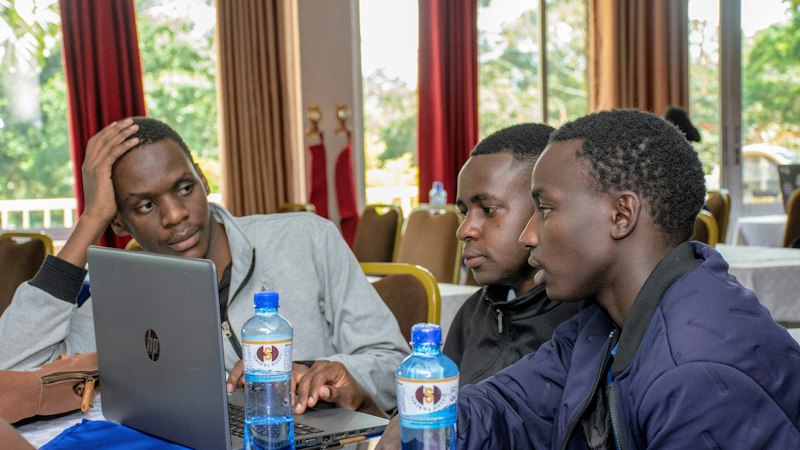
M31 Research set up and ran mobile behavioural labs at Ministry of Education resource centres in Lusaka, Eastern and Southern provinces, working closely with Busara and VVOB. Each lab was transported and assembled on site with 24 tablets running pre-designed games, a server, control computer and router, and generator backup.
Two sessions of up to 24 teachers ran each day, managed by an RCT manager and two enumerators per centre. Teachers played computerised games that mimicked classroom decisions, generating data on planning effort, instructional choices and classroom management.
What we delivered
- Recruitment of Catch Up teachers
- Mobile labs with 24 tablets each
- Two lab sessions per day at each centre
- Behavioural data from computerised games
- Transport reimbursement for participants
- Data to inform intervention design
What changed for the client
The trial gave Busara and its partners behavioural insights into teacher practice that informed the design of interventions for the Catch Up programme. The findings support strategies for scaling the programme and improving foundational learning for children in Zambia.